Your browser does not support JavaScript!

Configuring Local 2-Way Voice for International Teams

For global businesses, strong communication depends on how local you feel to your customers. Whether your teams operate across APAC, EMEA, LATAM, or North America, customers expect familiar caller IDs, reliable connections, and a fast response, regardless of where your agents are actually located. This is why local calling for international teams has become essential for sales, support, and operational workflows.

But achieving this local experience is difficult without the right voice setup. Many international phone numbers only support inbound calls. Outbound calls may display foreign or unverified caller IDs, causing customers to ignore them. And managing separate systems across countries often leads to inconsistent performance, increased overhead, and compliance risks.

Local 2-Way Voice solves these challenges. With one local number for both inbound and outbound calling, teams can maintain a trusted local presence while routing calls through approved, in-country paths. This results in higher answer rates, more predictable call delivery, and a seamless customer experience across regions.

At United World Telecom, Local 2-Way Voice is available in 90+ countries, and it fits into a larger global voice footprint with international number coverage across 160+ countries, advanced routing, softphones, CRM integrations, and analytics.

In this guide, we break down:

Why Your Global Teams Need Local 2-Way Voice

As global teams expand into new regions, maintaining a consistent and trustworthy communication experience becomes increasingly challenging. Customers prefer interacting with businesses that feel local, and they are far more likely to answer calls from familiar, regional local caller IDs.

But without the right voice infrastructure, teams often face issues, such as:

  • Low answer and pickup rates due to unfamiliar caller IDs
  • Inbound-only numbers limiting customer follow-ups when teams cannot return calls using the same trusted local identity.
  • Incorrect caller ID displayed due to failed caller ID authentication making calls appear as “Unknown” or mismatched numbers and leading to caller confusion and missed connections.
  • Agents switch between softphones, mobile apps, and CRM dialers, creating inconsistent and disruptive customer recognition.
  • Managing different providers, regional regulations, and operation overheads across countries.
  • Limited call data and analytics making it difficult to understand missed calls, call outcomes, or performance trends across markets.

Local 2-Way Voice helps resolve these challenges by giving teams a single local number for both inbound and outbound communication. International calls display a verified local caller ID and route through approved in-country paths. And all regions can be managed from one centralized platform.

Teams can operate across softphones, CRM dialers, SIP devices, and mobile apps with consistent caller identity, while call logs, performance metrics, and AI Call Insights offer clear visibility into global operations. Together, these capabilities form a reliable and scalable communication system for modern international teams.

What Local 2-Way Voice Means?

Local 2-Way Voice is a cloud-based calling solution by United World Telecom that allows businesses to use a single local phone number for both inbound and outbound communication in any supported market.

Instead of relying on foreign caller IDs or maintaining separate systems for each region, teams can operate as if they have a physical presence in every country they serve. This makes local calling for international teams possible at scale, helping businesses strengthen trust, increase answer rates, and deliver a consistent customer experience across global markets.

With United World Telecom, Local 2-Way Voice is delivered through carrier-grade PSTN replacement, compliant in-country routing, flexible device support, and a centralized control panel. Your teams can:

  • Receive inbound calls on local numbers
  • Place outbound calls with the correct local caller ID (where supported)
  • Route calls by time zone, team, language, region, or availability
  • Track usage with call logs, analytics, and optional AI reporting tools

Using one local phone number for both inbound and outbound communication helps businesses create a recognizable and trustworthy identity. Here are the core inbound and outbound call management capabilities:

Inbound: IVR, auto-attendant, time-of-day routing, call forwarding, failover forwarding, call recording

Outbound: Outbound caller ID management, dial via GCF softphone apps or web dialer, CRM integrations, click-to-call

Visibility: Call logs, reporting, and optional AI Call Insights (summaries/sentiment where enabled)

So, what can Local 2-Way Voice help your business achieve?

  • Higher pickup and callback rates with local caller ID
  • More predictable call delivery through in-country routing paths
  • One platform for global management instead of per-country patchwork
  • Flexible agent setups across devices and locations
  • Clear reporting to improve routing, staffing, and outcomes over time.

What 2-Way Calling Looks Like for Businesses

Local 2-Way Voice can support many different communication models depending on a company’s size, markets, and team structure. While each setup varies, the examples below show how global businesses might use local calling for international teams to improve customer engagement and operational efficiency:

Regional Sales Teams Using Local Caller IDs
A SaaS company expanding into Europe assigns French, Spanish, and Italian local numbers to its sales reps in London, where it’s headquartered. When reps call each market, they switch the outbound caller ID to match the region so prospects see a familiar local number instead of an international prefix.

Cross-Border Customer Support With Unified Routing
A travel company operating across LATAM could route incoming calls from Brazil to support agents in Argentina during off-hours. When those agents return calls, using the same Brazilian local number may help customers recognize the call more easily.

Remote Teams Working Across Multiple Devices
A remote support team answers calls via a desktop softphone during shifts, then uses mobile softphone apps for on-call coverage. Inbound rings can follow availability rules, while outbound always presents the approved local caller ID.

BPOs Managing Market-Specific Campaigns
A contact center in the Philippines may run separate campaigns for clients in the UK and Germany. Advanced routing could help teams direct calls to the right queues while outbound calls show a localized caller ID for each region.

Startups Testing New Markets
A startup entering the UAE or South Africa might purchase Local 2-Way Voice numbers to test early demand. Outbound calls with localized caller ID and access to analytics give teams insights into regional engagement.

How to Set Up Local 2-Way Calling for International Teams

Setting up Local 2-Way Voice comes down to six actions: choose markets → choose provider → activate numbers → build inbound routing → enable outbound caller ID → test and optimize.

What you’ll need to configure Local 2-Way Voice for your teams:

  • List of target regions or countries you plan to expand communications to
  • Cloud telephony provider like United World Telecom
  • Local phone numbers that support inbound and outbound calling
  • Users or ring groups managing calls

Whether your teams are distributed globally or operating from a centralized office, these steps can help you build a flexible and reliable setup for local calling for international teams.

1. Identify Target Markets Where Local Presence is Needed

Start with your highest-impact regions: where you sell, support, or expect inbound volume. If customers routinely ignore international numbers, that market is a strong candidate.

Look at your call traffic and sales data. Identify which countries or specific cities have your highest volume of potential customers. A local presence is most effective in regions where customers are hesitant to answer international prefixes.

Our customers can view call records for their different phone lines directly from the control panel:

Screenshot of call activity records from the United World Telecom control panel.

2. Find an Inbound & Outbound Global Telephony Provider

Not all local virtual numbers support outbound calling. Ensure your provider offers:

  • Verified local caller ID capabilities
  • In-country routing for compliant outbound calling
  • Inbound voice support with flexible forwarding options
  • Softphone and CRM integration, if desired
  • Call logs, analytics, and optional AI insights

Most importantly, ensure the provider has a robust global SIP network that supports outbound CLI, so your local numbers actually display correctly on the recipient’s screen. This ensures your numbers perform consistently across regions.

3. Buy Local 2-Way Voice Numbers
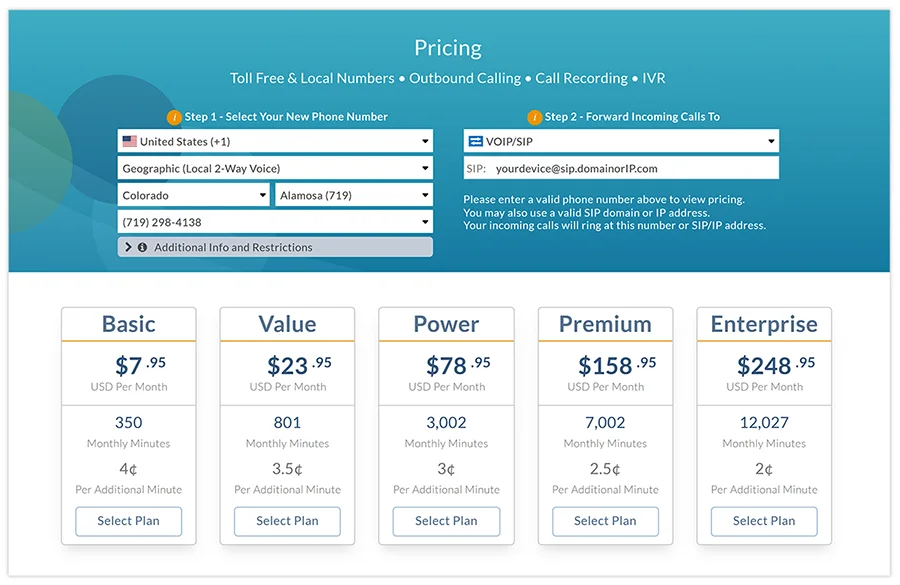
Screenshot of how to select a geographic Local 2-Way Voice number from United World Telecom

Once you’ve identified your markets, you can purchase your Local 2-Way Voice numbers for target regions. With United World Telecom, you can:

  1. Buy new Local 2-Way Voice numbers directly from inventory on our Pricing page
  2. Or, add outbound calling to existing numbers

Not sure how to get Local 2-Way Voice? Reach out to our experts or your account manager to confirm outbound availability for your target countries.

4. Set Up Routing for Inbound Calls

After your numbers are active, decide how those incoming calls should be handled, set up failover paths, and decide what happens if no one answers. Here’s an example:

  1. Primary route: local team/queue
  2. Secondary route: overflow team, call center, or after-hours coverage
  3. Tertiary route: voicemail or IVR

You can set up advanced routing rules to forward calls to:

  • Specific local teams or agent
  • Ring calls simultaneously or sequentially across multiple ring groups for a region
  • Teams’ office or deskphones
  • Softphone apps like United World Telecom’s desktop or mobile apps
  • CRMs or helpdesk applications like Salesforce or HubSpot with our Voice Integrations.

Use our IVR, routing schedules, and rules so customers reach the right team faster.

Screenshot of advanced routing and IVR features from the United World Telecom control panel.

5. Configure Outbound Caller IDs

Once your Local 2-Way Voice numbers are in place, the next step is configuring how your international teams will make outbound calls using those numbers. A properly configured outbound caller ID ensures that when your team calls customers, the recipient sees a familiar, local business number, helping increase answer rates and trust levels.

To start dialing out, you must configure your outbound caller ID for each line in the control panel.

In the control panel: Navigate to the Outbound Calling section and go to the settings of your desired outbound line. Here, you will see a list of outgoing caller IDs available for your account. Set your outbound caller ID here for this particular line.
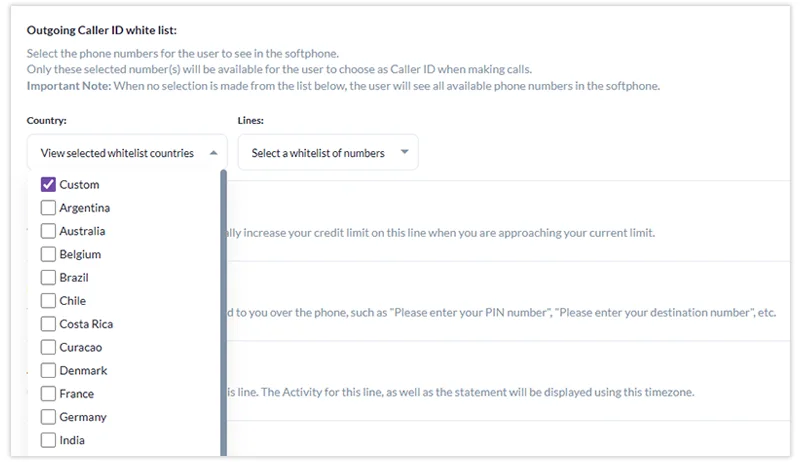
Screenshot of outgoing caller ID management feature from the United World Telecom control panel.

In the UWT softphone apps and softphone integrations: Train your teams to navigate to the softphone’s settings and ensure the correct outbound caller ID number is selected before dialing.

Screenshot of outgoing caller ID settings from the United World Telecom softphone apps.

This ensures that whenever your teams place a call through this line, the selected caller ID will be displayed. For maximum efficiency, agents can use click-to-call through our browser extensions or CRM integrations to dial numbers directly from a web page or lead record with one click.

This setup is especially helpful for companies focused on local calling for international teams, where localized outbound presence can make a significant difference in engagement.

For more information, read our outbound calling setup guide.

6. Test and Improve

Before scaling across regions:

  • Test outbound caller ID in each country
  • Confirm inbound routing works across time zones and devices
  • Review call logs and analytics to identify performance gaps
  • Add more Local 2-Way Voice numbers as your expansion continues

Once verified, you can monitor performance through advanced analytics, and teams may also enable AI Call Insights or generate Custom Reports for more detailed monitoring.

Common Pitfalls & How to Avoid Them

Even when your strategy for local calling for international teams is well thought out, small configuration gaps can affect how customers experience and trust your brand. Here are the pitfalls to watch for and ways to avoid them:

Buying Inbound-Only Numbers for Outbound: Many businesses buy a local number for international calling assuming it works both ways. If the number is inbound-only, your return calls may appear as “Private,” “Unknown,” or a foreign prefix, which can cause customers to ignore you.

Fix: Confirm Local 2-Way Voice coverage (inbound and outbound) before provisioning.

Incorrect Caller ID Mapping: If a representative calls a New York lead but displays a London caller ID, it creates immediate confusion. It is vital to ensure your outbound settings are dynamically mapped to the recipient’s region.

Fix: Standardize outbound caller ID rules by market and train agents on selection.

Fragmented Management: Managing multiple providers for different countries can lead to high administrative overhead and inconsistent call quality. A unified management system is necessary to keep your global communication simplified.

Fix: Centralize routing rules and reporting in one platform.

Ignoring Local Compliance: Some markets have strict regulatory requirements regarding address verification and caller ID use. Failing to meet these can lead to service interruptions.

Fix: Work with a provider that supports country-specific requirements and in-country routing.

Lack of Activity Monitoring: Without visibility into call traffic, you cannot optimize your strategy. You should monitor call duration, answer rates, and quality to ensure your team is performing effectively.

Fix: Track answer rates, missed calls, and call content; use analytics and optional AI tools for richer insight.

This is exactly why a trusted global telephony provider matters. At United World Telecom, we manage the complexities of local regulations and provide a unified platform to handle all your regions.

Why Choose United World Telecom for Local 2-Way Voice

Selecting the right provider is essential when building reliable local calling for international teams. Many of the common pitfalls and challenges of expanding internationally, like foreign-looking caller IDs, inconsistent routing across regions, compliance issues, or lack of visibility into call performance, stem from fragmented or limited telephony setups.

United World Telecom is built for international teams that need local presence without building local offices. You get:

  • Local 2-Way Voice coverage in 90+ countries
  • International phone number options across 160+ countries
  • Centralized control of numbers, users, routing, and reporting
  • Advanced inbound features for seamless global call management
  • Outbound caller ID management, softphone/web dialing, and CRM integrations
  • 24/7 support plus guidance on in-country requirements and routing best practices.

Whether your agents work from softphones, SIP devices, mobile apps, or CRM integrations, our global voice network keeps them connected with a trusted local presence and stable call quality.

If you’re scaling sales or support globally, Local 2-Way Voice gives your team a reliable way to call, answer, and follow up—while keeping the experience local for customers.

Ready to set up local 2-way calling for your target regions? Buy Local 2-Way Voice numbers from our pricing page or chat with our experts online; we’re here to help!
7 Ways to Use Local Caller IDs

If you are expanding your business into new regions or trying to differentiate your brand in a competitive industry, using a local outbound caller ID can help you increase call answer rates and connect with more prospects.

Using local, in-country caller IDs can greatly support your business efforts to reach potential clients, partners, stakeholders, etc., across the globe. They enable businesses to connect with locals as a local entity, bridging gaps and establishing a presence even before you make the first call.

Let’s look at:

  • Why your outgoing caller ID matters when making business calls and
  • How your business can use local caller IDs

Why Your Outgoing Caller ID Matters

What caller ID you display when reaching out to potential customers or making cold calls can significantly impact the outcome of those business calls. Consider this, about 80% of Americans do not take calls from unknown numbers. So, if your caller ID appears foreign, unfamiliar, or is marked “unknown,” it’s likely to be ignored or dismissed as spam.

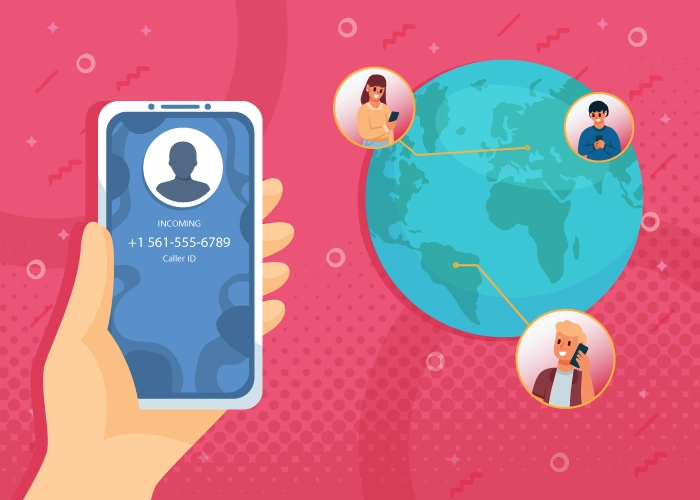
Instead, if you use an in-country caller ID—even when calling from outside the country—you may see increased chances of these calls being answered. For example, when calling customers in London, use a 204 London local phone number. Or use a +34 Spain number when calling prospects in Spain. This way, recipients feel that the call is from a local caller.

Displaying these local numbers as your outgoing caller ID will help establish a local presence for your business. This is especially useful when making sales calls, because the goal is to create and maintain a trusting relationship with customers from the beginning to the end.

How Does the Local Caller ID Feature Work

Local Caller ID, offered by VoIP providers, lets businesses choose what outbound caller ID to display when placing outgoing calls. To be able to change your outgoing caller ID, you’ll need an outbound calling plan.

United World Telecom offers an outbound calling service and a Local 2-Way Voice service where customers can make and receive calls with a cloud phone number.

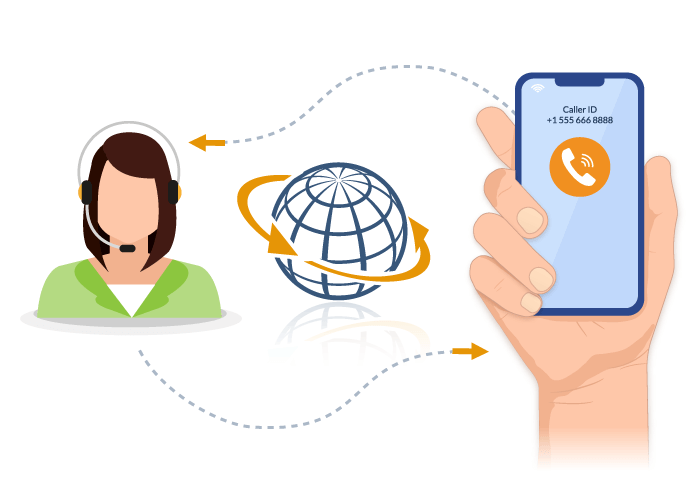
Here’s how it works: Before your agent makes an outgoing call, they go into the softphone settings and choose a local caller ID for the region they’re calling. Then, when they place the call, the person on the other end sees the local number instead of an unknown or foreign number.

United World Telecom customers can easily configure Local 2-Way Voice or caller ID settings in the control panel or through the Softphone right before making calls.

Local caller ID use case

7 Ways to Use Local Caller IDs for Business

Whether trying to break into new markets, make your business appear more approachable, or improve call answer rates, using a local caller ID offers plenty of advantages.

Let’s explore the different ways you can use this feature to help your business grow and connect with people more effectively:

Quick summary:

  1. Enter global markets and establish a local presence
  2. Improve answer and pickup rates
  3. Make it easy for customers to return calls
  4. Provide localized support
  5. Centralize distributed teams
  6. Conduct local market research
  7. Protect employee privacy

1. Enter Global Markets and Establish a Local Presence

Breaking into global markets isn’t just about having a great product—it’s also about communicating and building trust with local customers. Part of this comes from creating a reliable and trustworthy global phone system.

Local caller IDs are typically associated with local businesses. Customers in a given region will recognize these numbers as coming from within their country. This will encourage them to answer the call.

You can get Local 2-Way Voice numbers or add outbound calling lines from multiple countries at a time. This will let your agents connect with potential customers and prospects in these regions.

2. Increase International Sales by Improving Answer Rates

When expanding globally, your business doesn’t need to hire sales reps across different target regions to connect with local customers. Sales teams can optimize their global outbound and cold-calling efforts by using in-country caller IDs corresponding to the countries they’re calling.

Incoming calls with recognizable, local numbers have more chances of being answered, letting your sales reps get one foot in the door. This way, you can obtain global reach even with 1-2 regional sales teams, further expanding your international sales operations.

3. Make It Easy for Customers to Return Calls

Customers are far more likely to return a call to a local number since they know they will be charged a local rate, or call for free if it is a toll-free number. With a Local 2-Way Voice number, you give customers a convenient way to return your call by calling the same number. This way, they get to call your business for local rates, even if their calls are forwarded to an international destination where your teams are located.

This accessibility is crucial when agents are following up or providing customer support. Making it easy for customers and prospects to return your call goes a long way in improving customer engagement and brand image.

4. Provide Localized Support

While serving a global audience, localized support is vital. Calls from international numbers can often be mistaken for spam or robocalls, further affecting your outreach efforts. But calling internationally with a local number has a higher chance of calls being answered quickly.

Businesses can provide obstacle-free customer support by using local caller IDs when connecting with customers for follow-ups, resolving tickets, billing issues, etc. And with a Local 2-Way Voice number, these customers can call your business back conveniently, in case they miss your call. This way, you increase customer engagement for your support efforts.

5. Centralize Distributed Teams

Businesses with distributed teams and service centers can centralize communications under one unified phone system with virtual local numbers and outbound calling. These distributed teams can place outbound calls through their devices (smartphones, laptops, and computers) using softphone apps and easily display a specific caller ID overriding the existing one.

Even if employees are calling from their personal devices, a local caller ID ensures that all outgoing calls appear professional and credible, projecting a unified business image across different countries.

6. Conduct Local Market Research

Since local caller IDs can help increase your entry into global markets, you can use them to survey new markets, test products in new regions, gather customer feedback, conduct competitor research, and more.

Your outreach teams will have an easier time collecting valuable insights from their target audience for a clearer understanding of market trends and customer needs across different regions.

7. Protect Employee Privacy

By assigning local numbers for business calls, employees can keep their personal phone numbers private while maintaining a professional appearance. For instance, in telemedicine, where doctors and healthcare professionals often make calls to patients, using local caller IDs to mask their caller ID ensures that their personal numbers remain confidential.

Related: What is a Dynamic Caller ID for VoIP?

CSAT cta 2

Connect with More Global Customers by Calling Locally

Local caller IDs offer a simple but effective way to strengthen your business connections. From establishing a local presence in multiple markets to providing a unified communication channel, businesses will see several benefits for global communication.

You can use our local caller ID feature with any of our outbound calling or Local 2-Way Voice plans. Want to see which solution is right for your business needs?

Reach out to our experts and find out how you can optimize your outbound calling strategies.

5 Tips for Improving Your Outbound Calling Strategy

Source: DepositPhotos.com - Lic#5696700 ID#27446420

As a salesperson, you know the daily struggle of getting ahold of a potential customer and then losing them quickly like sand slipping out of a fist. While it’s good to stick to the basics, sometimes it may help to switch it up a little and get on with the times. So, how can you tweak your outbound calling strategy to lead to more sales?

Reevaluate Your Outbound Calling Tactics

Businesses make outbound calls to attract and convince new customers to purchase their products or service. And so, outbound calling goes hand-in-hand with sales. A couple of different factors come into play when creating and executing strong outbound calling strategies. Let’s look at how you can refine yours and increase overall sales.

1. Set Goals and Be on the Same Page

First and foremost, everyone needs to be on the same page and working towards the same goals. Therefore, spend some time discussing what the company wants to achieve through these calls. For example, how many sales do you need to make by the end of the quarter or biannually? Are all goals sales-focused or should some work towards customer care? And so on. Deciding these goals beforehand will ensure that everyone knows what they need to be doing and can track their progress accordingly. Actions with no end goal can be overwhelming and lead to a waste of time.

2. Work Alongside Marketing

Even though making sales calls is a job for the sales team, your in-house marketing team can provide insights into how to target and attract customers. For one, marketers can use market research to help you create a list of high-potential clients. They can also identify customers that don’t fall under your ideal audience so you do not waste time contacting weak leads. Additionally, your marketing team can help you understand the motive behind some customers purchasing your product which can then influence how you present and sell it.

3. Retrain Agents

Retraining employees every couple of months is a good idea because strategies and tools change. It is, therefore, necessary to keep employees up-to-date and teach them new techniques. Consider redoing your script if it is not drawing customers as you hoped it would. You can also use call recording features to review how employees perform on a call to highlight strengths and weaknesses. United World Telecom offers Outbound Call Recording that lets you record and access 100% of all calls for up to 6 years. Understand your call center agents’ daily challenges so that you can help them do better.

4. Adopt Active Listening Techniques During Outbound Calling

This goes without saying but when dealing with customers, agents must adopt active listening and pay attention to customer doubts or concerns. If a customer thinks you are calling just to make a sale and you do not actually care about their concerns, they will automatically switch off. Part of selling is to make the sale personal for each individual you are targeting. How can this specific person benefit from our product or service?

Be mindful of their time and always ask if now is a good time to talk or if they’d prefer setting up an appointment for later. If you don’t have an answer to their question, offer to follow-up and make sure you do so. These are some ways you can make the sale about the customer and not the business.

5. Use Analytics and Metrics

Lastly, be smart. Use analytics, metrics, and call tracking to determine customer preferences. What times or days are they more likely to answer? How many follow-up calls are appropriate before giving up? Can you employ other follow-up methods such as instant messages or email reminders? Play around with the data to tweak your strategies and find one that works best for your business.

Outbound Calling with United World Telecom

Upgrade your sales techniques by choosing United World Telecom’s outbound calling service. With this service, you will have full control in-house over how calls are placed and who is targeted. You, therefore, do not have to rely externally on an outbound call center. United World Telecom’s outbound calling service comes with a customizable caller ID. That is, if you purchase a variety of local and international virtual numbers, you can display one of those numbers when calling a specific country or state. This helps your enterprise create a local presence without the need to physically relocate. Sign up or talk to an expert for more information.

Inbound Sales Calls vs. Outbound Sales Calls

Source: DepositPhotos.com - Lic#11181280 ID#27446420

Trying to identify the best ways to increase sales for your business? There are a few different approaches you can take: inbound sales calls, outbound sales calls, or a combination of both. Let’s look at how each approach works and what you should keep in mind.

Inbound Sales Calls vs Outbound Sales Calls

Before we move into specifics, it is important to understand the basics of sales calls. These calls generally revolve around generating leads and sales. They include either contacting a set list of prospects to increase brand awareness and make sales. Or, running a strong customer service and support team that answers incoming calls, resolves queries and concerns, and sells new products and services. Depending on the type of business you run, you may benefit from inbound sales or outbound sales calls, or both.

Inbound Sales Calls

There are typically two types of inbound sales calls. The first type refers to “hot calling” which is basically customers calling your business to resolve a query or initiate a purchasing process. The customer may have interacted with your website or seen a promotion on social media that piqued their interest. Now, you have managed to get their attention and interest. But it is on the inbound sales call where you convert this interest into a sale.

The second type of inbound sales call refers to “warm-calling” where you call customers who have interacted with your business. Maybe they signed up for a newsletter or emailed you a query or downloaded a PDF through your website, etc. This customer could also be a past or recurring customer who you are following up with. They made the first contact and now it is up to you to give them a reason to make a purchase and become a returning customer.

Outbound Sales Calls

Outbound sales calls refer to cold calls made to a predetermined list of prospects. This list is usually put together through market research and buyer persona reviews. Then, your sales team calls these individuals, informs them of your company’s products and services, current promotions, and sells to them. Some companies outsource their outbound sales calls to virtual call centers.

More recently, businesses subscribe to an outbound calling service to call local and international individuals in a less expensive way. An outbound calling service lets you make calls through the internet instead of traditional phone lines. And you have the opportunity to customize your caller ID to display specific local or toll free numbers instead.

Which Can Benefit Your Business?

This depends on the type of business you run and what you want your calls to do. For example, do you want customers to reach you when they are ready? Can your marketing efforts support an inbound sales call strategy? Is lead generation the focus of your company? Do you want to use customer service and success to make more sales?

However, you do not have to choose one over the other. With a strong customer support and service team, you can have outbound and inbound sales calls working together. This way, you target prospects based on marketing results as well as engage with interested customers who reach out to you. Having the right communication tools can help you maximize your company’s visibility as well as generate more leads.

United World Telecom Can Help

Whether your sales strategy leans inbound, outbound, or a mix of both, having the right phone infrastructure makes all the difference. United World Telecom provides inbound and outbound phone solutions designed to help businesses connect more effectively with prospects and customers—across regions, time zones, and markets.

From handling high-volume inbound inquiries to enabling proactive outbound sales, you can buy and set up Local 2-Way Voice to place and receive calls using local phone numbers and caller IDs, improving pickup rates and customer trust. With flexible routing, global coverage, and seamless integrations, our solutions support the full sales lifecycle. To learn more, call us at 1 (877) 898-8646 or talk to an expert.

Use Outbound Calling and Call Recording to Improve Customer Relations

Source: DepositPhotos.com - Lic#25189551 ID#27446420

As a business owner, you know how important it is to build and maintain customer relations. Thankfully, there are telecom solutions that can boost interactions between a business and its customers. An outbound calling service and call recording software are two such solutions. Here, we will discuss how these services can benefit your business.

Customer Relations: A Necessity

Customer relations refers to the relationship between a business and its customers. Good customer relations leads to customer satisfaction which increases retention rates. If your business fails to keep customers satisfied, then you will find them leaving your business for a competitor. So, what can you do to help your employees create strong customer relations?

Outbound Calling: Connect with More Prospects

Outbound calling is one of United World Telecom’s premium services that allows businesses to call local and international clients at reasonable calling rates. Most companies think of outbound calling as a way of generating new leads where the sales team calls potential customers and tries to sell products to them. While outbound calling does accomplish this, it also can do more.

You can also follow up with existing clients to practice customer success and help them achieve their goals. Customer success is when you work closely with consumers and clients to chart a course of action that helps them complete a goal. In this case, interaction is more long term than a customer support interaction.

How can your business improve customer relations with outbound calling? You can:

  • Welcome new customers
  • Follow-up with recent purchases or older customers
  • Generate leads
  • Increase brand awareness
  • Study different markets and customer preferences
  • Research the market
  • Set appointments
  • Make reservations
  • Track customer success efforts
  • Send reminders
  • Collect feedback, and more

Call Recording: Improve Quality and Accountability

Call recording software, also offered by United World Telecom, lets you record up to 100% of incoming and outgoing calls. You can store these recordings as MP3 files for up to 6 years within your account’s control panel.

Recording business calls gives your business the opportunity to go back in time and review important interactions. As a result, you can determine areas of improvement and sales tactics that worked. Additionally, recordings can be studied to find better ways to communicate with clients and learn what it is that they prefer or appreciate. With call recording, you get a better understanding of your target audience and learn how to serve them better.

How can call recording help your business maintain customer relations? You can:

  • Study recordings to identify strengths and weaknesses
  • Use recordings to train new employees
  • Collect and track customer information
  • Conduct performance evaluations
  • Maintain compliance with regulations
  • Keep customer information safe
  • Gather feedback
  • Protect against liabilities, and more

Customer Success and Customer Relations

As a business owner, you must strive to provide your employees with the right tools that can support their jobs. An outbound calling service can help them connect with a wider range of potential customers. This will, in turn, bring a more diversified customer base for the company. On the other hand, call recording will help them learn from their mistakes and accomplishments. You can further incentivize appropriate behavior by rewarding employees who do well in the recordings.

When employees are given the right tools, they are able to focus more on customer interaction and customer relations. Services and software that are easy to use will ensure that less time is spent working the systems and more time is spent on winning customers over.

Win Customers Over and Grow Your Business

United World Telecom strives to give you top-notch features and tools that can support your business’ communication needs. We want to help you expand your reach and increase customer retention rates. Outbound calling and call recording are two popular services we offer for this reason. To learn more about how these services can benefit you, call us at 1 (877) 898 8646.

Making Outbound Calls from a Toll Free Number

Source: DepositPhotos.com - Lic#168593172 ID#27446420

Toll free numbers combined with outbound calling can greatly improve a company’s sales and customer retention rates. Businesses with a high outgoing call rate should, therefore, consider outbound sales strategies. So, how do you make outbound calls with a toll free number?

Outbound Calling: Purpose

Outbound calling is a communication service, mostly used by call centers and appointment setting services, to call customers or prospects on behalf of a corporation. Such calls are made to generate sales, conduct market research, provide customer care, and more. Outbound calling can, therefore, give you ways to attract new customers while also taking care of existing customers. Most businesses use outbound calling to:

  • Welcome new customers
  • Verify new accounts or purchases
  • Follow-up calls
  • Set appointments and make reservations
  • Send reminders for payments or appointments
  • Increase brand awareness
  • Research the market
  • Gather feedback, and more.

You can either outsource your outbound calling needs to centers designed for this service or take care of such calls inhouse. For the latter, you will need a reliable phone service that supports outbound calling while providing good call quality and additional communication tools like call forwarding, outbound IVR, etc. A virtual phone service offering these solutions may, therefore, be the ideal choice for an office phone system.

outbound toll free
Source: DepositPhotos.com – Lic#36991743 ID#27446420

Benefits of Getting a Toll Free Number

You’ll notice that large corporations and established enterprises will have a toll free number as their contact number. This is because toll free numbers are free to call as they charge the receiver instead of the caller. And so, individuals usually prefer calling a toll free number as they know that these numbers don’t charge extra for calling.

And so, getting a toll free business number will place your company alongside other large, famous ones. This will present your company as a professional one. Additionally, customers will appreciate this as it provides them with a quick and easy way to contact you. More importantly, when receiving a call from a toll free number, they will know that the call is likely coming from an established enterprise. Chances of them answering a toll free number is higher than a random, unknown number.

Customizable Caller IDs

Companies that have more than 50% of their calls going out to customers can benefit from an outbound calling service. United World Telecom’s Outbound Calling service lets you make local and international calls at reasonable rates. In fact, you can purchase a variety of virtual numbers that are toll free, local, and international, and then customize your caller ID to display one of these numbers. And so, you switch up your caller ID depending on where you are calling and if you want to seem like a local or national business.

Make Outbound Calls With United World Telecom

To get outbound calling, you first need to purchase virtual numbers from a toll free forwarding service or virtual phone number provider. You can quickly sign up for a business toll free number on the United World Telecom homepage. Select the desired number type and prefix, and enter the destination number; this is where you want your calls forwarded to.

Then, choose a phone plan and add Outbound Calling to the plan. With United World Telecom, you can also add Call Recording to record up to 100% of outgoing calls. This is a great feature to use for quality assurance and compliance purposes.

Once you complete your purchase, you will have a toll free number service ready for use. You can then open your control panel and navigate to the Outbound Calling tab to start making outbound calls. Here, you will also have the option to change your caller ID. Start making outgoing calls and generate new leads and sales with your toll free number.

Attract More Customers with a Toll Free Number

Maintain a professional company image and upgrade your cold-calling and customer retention strategies with outbound calling and toll free numbers from United World Telecom. We offer business numbers in more than 160+ countries, so we can assist you in reaching clients all over the world. Sign up today or contact United World Telecom at 1 (877) 898 8646 for more information.

Making Professional Outbound Calls from a Virtual Phone Number

Source: Stockphoto.com O#100005523906 ID#100200144052

Making Professional Outbound Calls from a Virtual Phone Number

Have you wondered about making professional outbound calls from a virtual phone number? It’s simple. You can make calls from your cell phone, home landline, or any number of your choosing. In doing so, your virtual phone number will appear as the number on the receiver’s caller ID. 

Businesses Need the Right Tools for Professional Communication

Life is busy; entrepreneurs are always on the go. Imagine being able to use your cell phone to call clients, but have your business line (a virtual phone number you own) show up on their caller ID when you call them. This is more professional and allows for many other features to work alongside the virtual phone number.

Outbound Calling Keeps Your Business Image Aligned

When it comes to business, time is money. Being reliable and returning calls in a timely manner should be a top priority. Making professional outbound calls from a virtual phone number helps you prioritize your customers. The flexibility in using virtual phone numbers for business is unsurpassed, and there are many other additional benefits they include.

Here are just a few:

Keeping Work and Personal Phone Numbers Separate

When you purchase a virtual phone number for business, you can still use the mobile phone and/ or landline phone you already own. However, you also get a business number with many features and your personal phone number still remains private. You’ll always know when calls are made to your business number, and a customized ring can be used for those calls.

Virtual Phone Numbers Help You Boost Professionalism

If you know a business-related call is coming in, you can prepare for the call with the way you answer the phone. Whether it is your actual greeting when you answer or your tone, these details matter. Being able to receive a business call wherever you are, allows you to get things done out of the office while keeping you in touch with your market. Adding features to partner up with the virtual phone number can also help your business to appear larger and more established. Adding features such as extensions can help to get calls routed to the correct department or person more quickly. This can help to increase customer satisfaction, which can impact overall business success.

Making Professional Outbound Calls
Source: Stockphoto.com O#100005523906 ID#100200144052

Never Miss a Call

Missing a call can mean missing a sale or a client altogether. The flexibility that is offered by virtual phone numbers allows for you to make and receive business calls and texts from anywhere, take multiple calls at a time by routing them to another person or team within the organization, or allow the caller to leave a message in a customized voicemail message inbox.

Get Set Up Easily and in Minutes

Set up of virtual phone numbers is easy and quick. There is no hardware that needs to be installed. Everything is cloud-based, including the control panel, and providers such as United World Telecom make everything seamless. They keep it super simple with a walkthrough of setup and a customer service team that is available around the clock to answer any questions.

Making professional outbound calls from a virtual phone number beats making outbound calls from a personal mobile phone number or landline. Establishing a rapport with your market that is professional is key to staying power. Your customers and clients need to see you as reliable, trustworthy, and robust, so they feel comfortable investing in your business. Using virtual phone numbers is an easy way to build upon all of these things.

Get Outbound Calling Virtual Numbers from United World Telecom

Purchasing a virtual phone number from United World Telecom allows you to have a local, international, or toll free phone number for your business. You can use it to make outbound calls and you can receive inbound calls through it. Virtual numbers allow you to expand your business to international markets while keeping overhead costs down. With over 20 years in the business of offering telecommunication solutions for businesses all over the world, United World Telecom understands how important it is for customers to be able to reach you and for you to be able to get in touch with those customers as well.