Your browser does not support JavaScript!

Using Year-End Call Data to Drive Smarter Global Voice Strategy in 2026

As 2025 winds down, IT, sales, and support decision makers and managers are entering one of the most important planning cycles of the year: translating twelve months of communication data into operational decisions.

The shift toward data-driven CX is no longer aspirational. McKinsey & Company notes that 57% of service leaders expect call volumes to increase by as much as 20% over the next one to two years. This means businesses must prepare and optimize their voice strategy on a large scale.

And in a world where voice remains the most critical channel for high-stakes conversations, the insights hidden in your call records matter more than ever.

Whether you manage distributed sales teams, run a global support operation, or handle regional compliance for multi-country voice networks, your call data is one of the most reliable predictors of what your customers need from you next year.

With Custom Reports and AI Call Insights from United World Telecom, teams can turn raw call activity into meaningful guidance for 2026 planning.

Below, we break down five practical ways to use year-end call data—such as CDRs, transcripts, sentiment scores, and AI-generated summaries—to inform strategy, coaching, staffing, and customer experience improvements in the year ahead.

Why Year-End Call Data Matters Across Every Department

While consumers are increasingly open to non-phone channels like chat, email, and even social media, live phone support continues to play a critical role across every generation. Even as digital adoption rises, customers still turn to voice when they need clarity, reassurance, or fast resolution. For businesses, this highlights a crucial need to understand your call traffic, trends, and content.
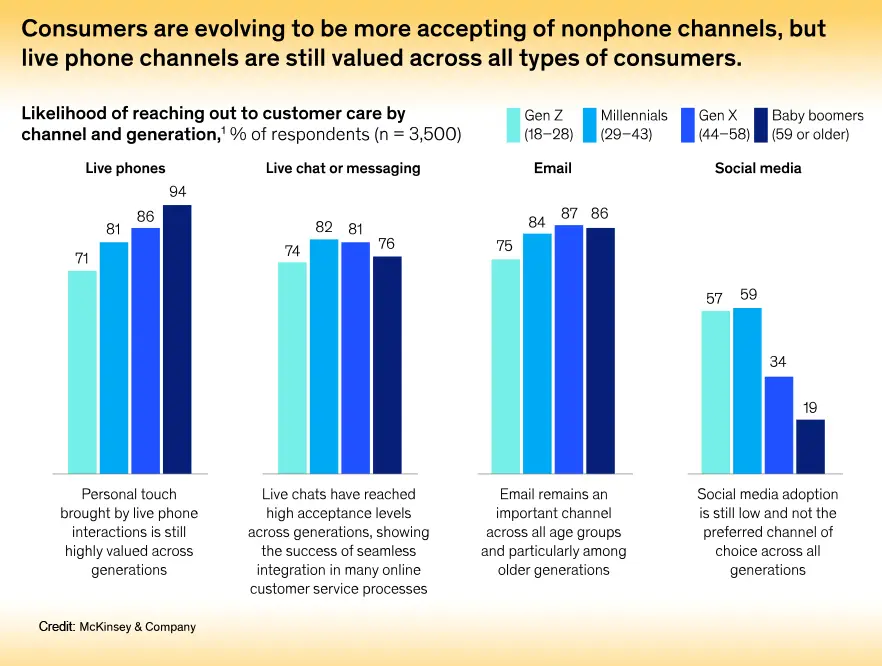
Mckinsey chart

Year-end reporting isn’t just valuable for managers and stakeholders; it’s a valuable asset across departments. Sales leaders use call summaries and transcripts to understand which messaging resonated across regions. Support managers rely on sentiment trends and CDRs to spot recurring issues, staffing gaps, or routing inefficiencies.

Product teams can identify feature requests, emerging customer needs, and friction points that appear repeatedly in conversations. Even marketing and operations teams benefit from understanding call drivers, customer expectations, and patterns across markets.

When each department reviews and analyzes call data through its own lens, your organization enters 2026 aligned, informed, and better prepared to execute on shared goals.

1. Get a Comprehensive View of Past Year’s Call Activity

Year-end reports can be strategic inputs when you know what data to look for. When you export your Call Detail Records (CDRs), call transcripts, sentiment scores, and summary reports from your United World Telecom dashboard, you are capturing the communication patterns that shaped customer journeys throughout the year.

These datasets help answer questions that matter for next year’s strategy:

  • Which regions drove the highest inbound volume and why?
  • What time windows experienced the highest call traffic?
  • Which teams handled the highest volume and which needed support?
  • What product or service categories triggered the most negative sentiment?

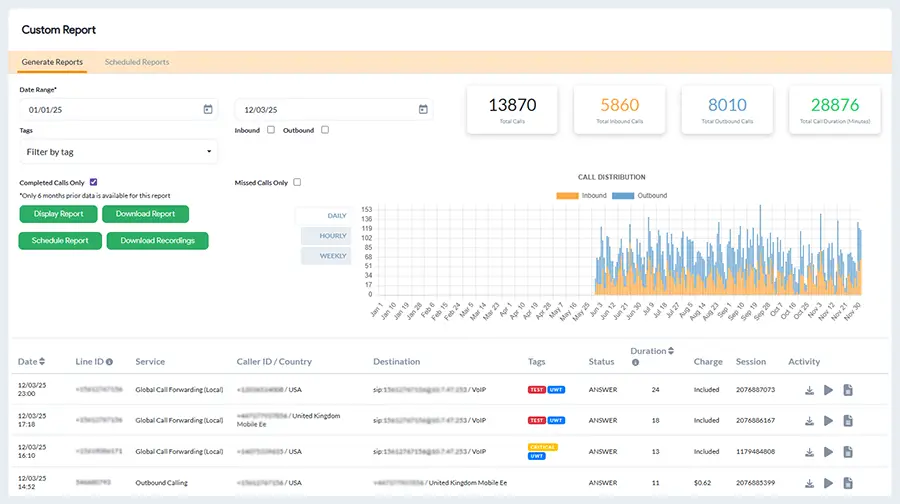
Through the control panel, you can manually analyze Call Activity reports or generate Custom Call Reports for more focused visibility. Filter by:

  • Date range
  • Call direction – inbound or outbound
  • Phone tags – tag your phone lines for different regions or departments in advance to see granular performance
  • Completed calls only
  • Missed calls only

yearly reports

These insights give you a clearer view of coverage gaps, training needs, call routing efficiency, and the customer issues that dominated the past year. Use these reports to make operational plans and adjustments with measurable data instead of relying on anecdotal insights.

2. Turn Transcripts and Recordings Into Training

Instead of archiving transcripts and call summaries, turn them into next quarter’s training material. AI Call Insights makes it easy for managers to review customer-agent conversations at scale, without manually auditing hundreds of calls.

Recordings and transcripts help you:

  • Identify phrases used by customers and top-performing agents
  • Pinpoint common pain points or obstacles customers face
  • Spot friction points in scripts or IVR menus
  • Surface policy or service misunderstandings or knowledge gaps
  • Build scenario-based training modules for new hires

For sales teams, transcripts reveal which talking points resonate across regions and which objections require new enablement content. For support teams, they capture the wording that leads to faster resolution.
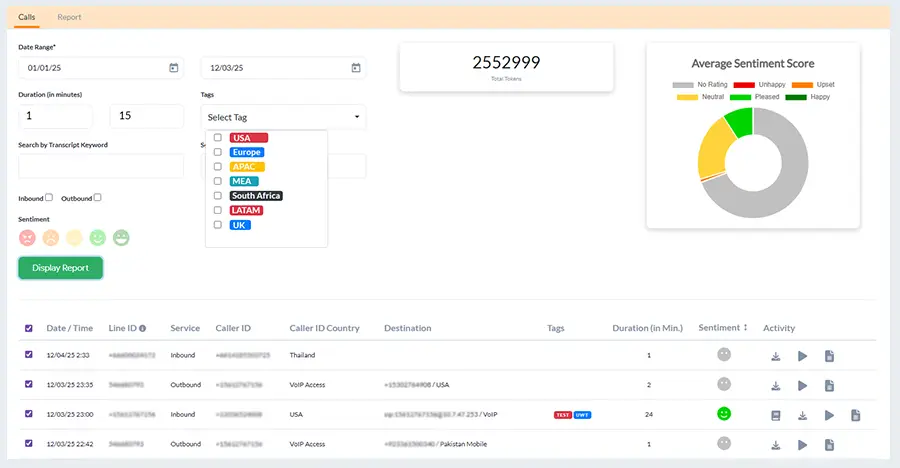
ai yearly report

This call data is easily accessible in our AI Insights dashboard (for customers who have this feature turned on). View sentiment scores, summaries, and transcripts for all calls. Use our keyword search tool to further filter your call activity to see more granular data.

Starting the new year with transcript-driven training ensures teams are aligned before Q1 volume picks up.

3. Use Sentiment & Summaries to Optimize CX and IVR Flows

Sentiment analysis helps managers and agents understand the tone and emotional context of customer interactions. When aggregated across thousands of calls, sentiment trends offer a blueprint for program-level improvements. Sentiment data can reveal:

  • Surges in frustration tied to billing periods or product launches
  • Declines in sentiment after a service change or outage
  • High-performing agents who consistently defuse difficult situations
  • Issues with product or feature messaging and capabilities
  • Confusion triggered by IVR menu options, outdated routing paths, or agent incapabilities.

Pair sentiment with AI-generated call summaries and you get a condensed, high-value view of what customers actually experienced this year. You can dig further into negatively rated calls for a deeper understanding of how or where interactions fail.

These insights can guide updates to training, staffing models, escalation paths, IVR flows, and even product messaging in 2026.
CSAT cta 2

4. Schedule Report Exports Before the Year Ends

Global teams often run into a familiar challenge: last-minute scrambles to gather data for year-end reviews. Scheduling call reports ensures that leadership has the metrics needed for Q1 forecasting and budgeting. Ideally, you generate and schedule these reports before December closes. In your report, you can include:

  • Call activity (inbound and outbound) to analyze regional traffic and call outcomes
  • Call duration to understand the effectiveness of your voice channel
  • Sentiment scores to benchmark team performance
  • Call summaries to consolidate themes without reviewing every transcript
  • Call costs (inbound and outbound) to determine the ROI of sales and marketing campaigns
  • Phone tag filters to view call reports for specific phone lines or regions.

Having this data in advance builds alignment between support, sales, and operations teams before new year changes roll out.

5. Build New Initiatives With AI Call Insights

Year-end data is only powerful if it turns into action. AI-driven Call Insights—call summaries, sentiment, transcriptions, and keyword searches—make it easier to translate call activity into operational decisions.

Here’s how forward-looking teams can use these insights to prepare for the new year:

  • Plan staffing and scheduling: Identify peak hours, seasonal spikes, and under-resourced regions.
  • Refine scripts and enablement: Build new scripts based on real customer dialogue across markets.
  • Optimize routing and IVR: Update menus, reduce loops, and shorten time-to-resolution.
  • Enhance QA and coaching: Develop measurable scorecards and recognize high performers.
  • Strengthen global consistency: Ensure teams in APAC, EMEA, LATAM, and North America follow the same playbook.

With distributed teams and rising expectations for reliable and responsive support, AI Call Insights help global businesses operate with greater precision and consistency.

From Raw Data to Real Outcomes

Closing out the year with high-quality communication data gives your organization a strategic advantage heading into 2026. Export your reports, analyze sentiment, review transcripts, and identify patterns across your global operations. When combined with AI Call Insights, these data points help you make smarter staffing, training, and workflow decisions, so you can improve customer experience, boost efficiency, and support your teams with clarity.

If you’re ready to strengthen your global support strategy for 2026, your year-end call data is the best place to start. Explore our Custom Reports and AI Call Insights features to see how we can help you get the most out of your call data. Want to learn more? Connect with our experts or chat with your account manager today!
Call Analytics: What Are They and How to Use Them?

Many businesses are drowning in phone call data, yet struggle to extract actionable insights from every conversation. Without clear, immediate understanding of call outcomes, critical details slip through the cracks—resulting in missed sales opportunities, ineffective customer service, wasted resources, and reduced ROI. This gap in understanding not only hampers effective marketing and customer service strategies but also leaves valuable opportunities unrecognized, affecting overall business performance.

To execute smart marketing, sales, and support strategies that will increase your business’ visibility and awareness, your business needs to know what exactly your target audience wants and how to best appeal to them. And one of the ways that they can study this is through call analytics.

Let’s look at how call analytics work, different features and solutions teams can use to analyze call data, and why your business needs to invest in these tools.


Why Call Analytics is Necessary for Business

First, what are call analytics? Call analytics involves collecting detailed data on phone interactions—from call duration and frequency to conversion rates and customer sentiment. This data is then analyzed to identify patterns, gauge campaign effectiveness, and uncover insights that can improve customer engagement.

By integrating features like call recordings, AI insights, call detail records, modern call analytics transform raw data into actionable intelligence.

Why should your business analyze call traffic?

By harnessing the power of call analytics, your business can uncover hidden patterns, optimize marketing ROI, and elevate the customer experience. Whether you’re analyzing individual interactions or examining aggregated data trends, robust call analytics delivers insights that traditional metrics often miss—providing a strategic advantage to refine your approach and drive success. Leverage actionable insights to drive operational efficiencies and boost overall business performance. Identify areas for improvement in real-time and ensure every customer interaction is optimized for success.

The best part? The analytics come in handy across sales, support, and marketing efforts, helping your teams make the most out of call content and data.

How Does Conversation Analytics Work?

Call analytics can help your sales, support, and marketing teams gather information about calls and their outcomes so you can use this to your advantage. Call analytics helps you analyze:

  • Individual calls to study how particular calls go, why they succeed or fail — Use call sentiment ratings or call summaries.
  • A group of calls to determine their source and how they impact your business — Use filters, phone tags, and date ranges.

So, how do call analytics work?

  1. Use virtual international phone numbers that have call tracking abilities.
  2. View call detail records to see core call traffic data like call direction, duration, caller ID, phone lines called, etc.
  3. Access deeper insights with advanced features like recordings, transcripts, AI analysis, sentiment ratings, and so on.
  4. Apply the insights to enhance your strategies across different departments and locations.

Top Features of Call Analytics

For companies that use phone numbers as their main call-to-action, call analytics can give great insights into which areas of marketing are more successful than others. This is done by evaluating various call analytics features such as:

Advanced Reporting

In order to conduct call analytics, one must have access to advanced and detailed call records. This is where advanced reporting comes into play. This feature will give users access to information needed to study how different communication and marketing channels are working. For instance, you can gain insights into peak and preferred call times, preferred communication channels, geographic information, and so on.

Call Recording

Hosted call recording records all incoming and outgoing calls and stores them for future review. Reviewing recordings will help you understand what works and doesn’t work when an agent or employee is on a call with a potential customer. You will also be able to identify areas of concern that customers may have or certain preferences and expectations they come with. You can then target these issues in your ads and drive up your conversion rate.

Call Summaries

With AI-driven call summaries, you can review lengthy conversations to identify key points and action items. Use AI to quickly distill lengthy conversations into concise summaries, highlighting key discussion points and action items so you never miss critical insights. Review summaries with team members for faster decision-making and improved follow-up processes.

Sentiment Analysis

An AI-powered sentiment analysis tool evaluates the tone of each conversation, allowing you to gauge customer satisfaction and adjust your strategies accordingly. The call sentiments are typically rated as positive, neutral, or negative. Use these ratings to identify which calls require further attention, helping managers and agents fine-tune their approach to customer service.

Call Transcriptions

While call recording lets you listen to each call, call transcriptions let you read the conversation. Again, similar to call recordings, reading call transcriptions can help you get a visual idea of how calls are performing and what can be done to make them better. Another similar feature is voicemail transcriptions that send voicemails in text format to your email. This too can help you gain insight into customer behavior and preferences.

Ways to Use Call Analytics: Use Cases Across Teams

From unlocking patterns in customer interactions to tailoring your messaging and support to provide targeted coaching and enhance overall team productivity, managers and agents can use analytics to improve different facets of the business. You can get granular data by tracking each call or build year-end call reports to see overarching patterns and trends. Here are some common use cases:

Sales Teams

Call analytics empowers your sales team by offering a detailed breakdown of every interaction with prospects. By analyzing individual sales calls, you can identify which parts of your pitch resonate most with potential customers. For instance, you can track the tone and language used during successful conversions, then refine your messaging to highlight those winning elements.

This granular insight enables your sales team to adjust their approach in real time, boosting conversion rates. Additionally, by comparing calls that resulted in closed deals versus those that didn’t, you can pinpoint key differentiators, overcome objections more effectively, and fine-tune your overall sales strategy for improved performance.

Support Teams

By delving into individual support calls or tracking call activity across different service centers, you can identify recurring issues or common pain points that customers face. These issues could relate to product development or may be location-specific, and with the ability to filter and gain a more detailed look at call activity and content, you can determine critical gaps.

This data can inform targeted training for support agents, ensuring they are equipped with the right knowledge and skills to address these issues efficiently. Furthermore, by monitoring call resolution times and customer sentiment, you can optimize workflows, streamline problem resolution, and ultimately enhance customer satisfaction and loyalty.

Marketing Teams

For marketing teams, call analytics is an invaluable asset in measuring campaign effectiveness and channel performance. By assigning unique call tracking numbers to various marketing initiatives—whether it’s your main business line, a dedicated number for social media campaigns, or numbers for specific geographic locations—you can gain clear insights into which channels are driving quality leads.

This allows you to track the source of each call, assess the conversion rates of different campaigns, and allocate your marketing budget more effectively. By understanding which initiatives generate the highest ROI, you can optimize your marketing spend, focus on high-performing channels, and continually adjust your strategy to align with evolving market trends.

Agent Performance Management

For global sales and support managers, ensuring agents perform at their best is essential for driving customer satisfaction and revenue growth. Call analytics provides a data-driven approach to evaluating agent interactions, allowing managers to identify both strengths and areas for improvement. By analyzing call duration, sentiment trends, and conversation effectiveness, managers can gain insight into how well agents handle objections, resolve customer concerns, and follow call scripts.

Training and Debriefing

Effective training and debriefing are critical for improving sales and support team effectiveness. With recordings, AI-powered transcripts, and call summaries, managers can easily review key interactions and extract learning points without listening to hours of recorded calls. New hires can benefit from training modules that showcase successful call strategies, while struggling agents can receive tailored coaching based on actual call performance data.

Integrations and Unified Communications

Call analytics becomes even more powerful when seamlessly integrated with existing business communication tools. Many organizations rely on CRMs, help desk software, workforce management tools, and unified communication platforms to manage customer interactions. By integrating call analytics with platforms like Salesforce, Zoho, HubSpot, or Zendesk, businesses can consolidate customer insights, track communication history, and create a more connected customer experience.

Call Analytics with United World Telecom

Our advanced features go beyond basic call analytics to provide you with a comprehensive view of your call data. By combining call detail records, call recording, and AI insights, we can help you transform raw call information into clear, actionable insights, empowering sales, support, and marketing teams to enhance performance and boost customer satisfaction.

  • Get a comprehensive picture of call traffic and activity by viewing call activity reports or listening to recordings.
  • Whether it’s extracting key conversation points with automated call summaries, generating detailed call transcripts for in-depth review, or evaluating customer sentiment, AI Call Insights is your gateway to smarter decision-making and improved business outcomes.
  • Integrate call analytics into your favorite CRMs or help desk software; chat with us to learn more!

Best Practices

To maximize the benefits of Call Analytics, consider these best practices:

  • Regularly Review Call Data: Schedule routine reviews of call summaries, transcripts, recordings, reports, and sentiment reports to identify trends and areas for improvement.
  • Integrate with Your CRM: Ensure your call data is seamlessly integrated with your CRM to create a unified view of customer interactions.
  • Train Your Team: Use detailed analytics to provide targeted training sessions, helping agents refine their communication skills.
  • Monitor KPIs: Track key performance indicators such as call conversion rates, customer satisfaction scores, and agent performance metrics to continually optimize your strategies.

Maximizing Business Communication with Call Analytics

Ready to unlock the full potential of your call data? Embrace the future of call analytics with advanced reporting and analytics features by United World Telecom. We can get you set up with call recording, call tracking, AI insights, custom reports, and detailed call records to study how your incoming and outgoing business calls are performing. To learn more, visit our website or speak with our experts today.